What Religion Is Jasmine In Aladdin? – Celebrity
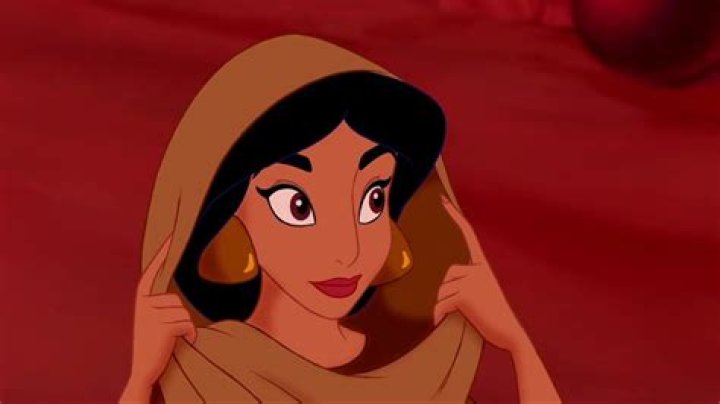
Princess Jasmine is the deuteragonist of Disney’s 1992 animated feature film, Aladdin. She is an independent, rebellious young princess from Agrabah, a Middle Eastern kingdom ruled by her father, the Sultan.
Jasmine is the princess of Agrabah and Aladdin’s wife. Although the The Tale of Aladdin is originally from The Arabian Nights, Jasmine is a young, Arabian princess, with her looks being summed up to simply “beautiful”.
Of course she is Muslim, Aladdin is taken from Arabian Nights – The Tales of 1001 Nights. That is a collection of Arabian tales, something like the Tales of the Brothers Grimm. Only in Arabic. And with Muslims. That’s because Arabs are Muslims. Usually it is worn for Belly Dance.
There are many problematic concerns with how Princess Jasmine not only represents a Middle Eastern princess, but also the Arab culture and Islamic traditions in a distorted and Oriental representation. Jasmine’s physical appearance is one that differs from any Disney princess that came before her.
How old is Jasmine in Aladdin?
Jasmine debuted in Aladdin (1992) as the soon 18-year old Princess of Agrabah, daughter of the Sultan. Frustrated with constantly having decisions made for her and being pressured into marrying a prince by law, Jasmine disguises herself as a peasant and escapes the palace. In the nearby marketplace, Jasmine befriends street thief Aladdin after he rescues her from an angry vendor who very nearly chops her hand off. Escaping to Aladdin’s hideout, the pair bonds over the realization that they both feel trapped in their own environments and long for better lives. When Aladdin is soon arrested by the palace guards, Jasmine demands his immediate release only to find her orders overruled by Jafar, the Sultan’s scheming grand vizier. When the princess confronts Jafar, he lies and tells her that Aladdin has already been executed, leaving Jasmine distraught and blaming herself for his death; in reality, Jafar is using Aladdin to retrieve a magical lamp containing a genie. When the Genie, who saves and befriends Aladdin, grants his wish to be transformed into a prince to better his chances of wooing Jasmine, Aladdin introduces himself to her as “Prince Ali.” Although initially unimpressed, Jasmine is charmed after joining him on a magic carpet ride, at the end of which she discovers that the prince is, in fact, the same peasant she met in the marketplace. However, Aladdin convinces Jasmine that he truly is a prince who, much like her, only occasionally disguises himself as a commoner. When Jafar learns the truth about Aladdin, he steals the lamp and becomes the Genie’s master, banishing Aladdin and forcing the Genie to make him Sultan, while enslaving both Jasmine and her father. After refusing to marry him, Jasmine kisses Jafar to distract him while Aladdin returns in time to trick Jafar into wishing himself into a genie and thus trapping himself within the lamp. Jasmine and the Sultan are finally freed, and she and Aladdin become engaged after the Sultan abolishes the law so that Jasmine can legally marry whomever she chooses.
Having just recently animated two previous Disney heroines – Ariel from The Little Mermaid and Belle from Beauty and the Beast, respectively – Henn initially suffered from a severe case of ” artist’s block ” while attempting to design his third heroine, Jasmine. While working on the character at Disney-MGM Studios in Florida, Henn noticed a young female amusement park guest with long black hair, and ultimately decided to use her as his initial inspiration for Jasmine; the guest’s identity remains anonymous to date. Earliest sketches of Jasmine were based on various exotic-looking supermodels in addition to her namesake Jasmine Guy, but the actress’ facial features were ultimately considered to be too “severe” for an animated character. In search of “something fresh to help with the physical look of her,” Henn was eventually inspired by a high school graduation photograph of his younger sister Beth Allen, who wore her hair in a style similar to what would ultimately become Jasmine’s. Henn credits his sister with helping him overcome his artist’s block, and the directors ultimately approved of Henn’s concept design. The character’s facial features were further inspired by actress Jennifer Connelly, specifically her eyebrows. Additionally, some of Larkin’s own mannerisms and physical traits were incorporated into the character. Henn credits one particular dinner conversation he had shared with Larkin with proving very inspirational in terms of helping him discover Jasmine’s emotional side. Model Robina Ritchie served as an on-location reference for the animation, pantomiming actions to the recording of Larkin’s voiceovers so, in Henn’s words, “the animator gets the feeling of what the real human movement would be.”
According to singer Brad Kane, who provides Aladdin’s singing voice, ” Aladdin is a stealth feminist movie” because Jasmine is “willing to give up being a princess to not get stuck marrying someone.”. Jasmine’s defiance eventually successfully convinces her father to change the constitution.
The filmmakers decided to dress Jasmine in blue to symbolically represent water, which is “the most precious substance one can find in a desert.”.
BuzzFeed compiled a list citing “15 Times Jasmine From Aladdin Was The Most Feminist Disney Princess.” The same website included Jasmine rejecting traditional standards of marriage second on its list of “27 Feminist Disney Moments That Unapologetically Smashed The Patriarchy.” Ranking Jasmine second on a list analyzing “Which Disney Princess Most Embodies Feminist Principles,” author Shannon Larson of The Huffington Post appreciated the character for rejecting the idea of marriage being necessary, asserting her right to marry whomever and owning her sexuality, but criticized the fact that she does not complete her attempt to escape royal oppression. Sonia Saraiya of Nerve ranked Jasmine fifth in her article “Ranked: Disney Princesses From Least To Most Feminist.” Saraiya praised her personality, likening her boldness, curiosity, and skepticism of marriage to that of Belle while commending her for “falling for a completely inadequate ‘street rat’ and whisking him out of poverty, instead of the other way around.” However, Saraiya labeled Jasmine’s use of sexuality her “only power,” criticizing her for sending a negative message to young girls. When questioned about whether or not Jasmine is a positive role model because “all she wants to do is get married,” Larkin herself defended her character, explaining, “That’s not true. Jasmine says to a generation of little kids about marriage that the law is wrong. She risks everything—her safety, her comfort, everything she knows—and goes out and finds a way to change the marriage law … Yeah, she’s a good role model!’ Really good! Whether it’s connected or not, that person that the writers created that I got to portray, I’m so proud of her. And I feel like she was ahead of her time.”
Although several details of the original folk tale were altered for the film adaptation, Jasmine’s main storyline – being pressured into marriage – remained mostly untouched. However, while Badroulbadour initially resents Aladdin, Jasmine on the other hand is almost immediately charmed by him. Screenwriters Ted Elliott and Terry Rossio rewrote Jasmine into a “stronger” character who actively longs for freedom from her “regal confinement.” According to Dave Smith of the Disney Archives, the “liberated” Jasmine primarily “seeks to escape her present lifestyle.” The idea of a disguised Jasmine stowing away from her palace in the middle of the night was inspired by the romantic comedy film Roman Holiday (1953), in which Princess Ann, portrayed by actress Audrey Hepburn, similarly escapes the royal embassy in disguise in order to spend one day exploring Rome on her own.
In June 2013, Jasmine appeared in the Disney Junior animated series Sofia the First, with both Larkin and Salonga reprising the respective roles. This occasion marked the character’s first television appearance since House of Mouse more than 10 years prior. Cosplay of Jasmine, D23 Expo, August 2015.
How old is Jasmine in Aladdin?
Jasmine is the soon-to-be sixteen year old daughter of the wealthy Sultan of Agrabah. Unwilling to marry any of the snobbish and self-centered princes her father suggests, she runs away from home, but having never been outside the palace before, she inadvertently gets into trouble when she gives an apple to a young boy without paying for it. Before the merchant can punish her by amputating her hand, a street urchin named Aladdin quickly steps in and saves her by claiming that Jasmine is his sister. Aladdin is later arrested by guards led by Razoul after Jasmine thanks Aladdin for saving her and the two share a bonding moment at Aladdin’s place as well as developing a mutual attraction. Jasmine reveals herself to them and demands that they let Aladdin go, but Razoul apologizes and explains that he is doing so on Jafar ‘s orders. Jasmine confronts Jafar and demands that they release Aladdin, but Jafar tells her that Aladdin has already been executed; Jasmine is left distraught and blames herself.
ADVERTISEMENT
During this time, Jasmine sees through Aladdin’s disguise and accuses him for lying to her, but Aladdin convinces her that he sometimes dressed up as a commoner to “escape the pressures of palace life,” which she relates to. She is taken back to the palace and the two share a kiss.
Although the Tale of Aladdin is originally from The Arabian Nights, Jasmine is a young, Arabian princess, with her looks being summed up to simply “beautiful”. Jasmine is a princess with tan skin and long, lustrous black hair, big brown eyes, and a distinct hourglass figure. She normally wears her black hair in a ponytail, held together by two light blue bands. She normally wears a light blue tube top with off the shoulder sleeves, and matching pants along with blue shoes along with a matching headband with a jewel in the center and wears large gold earrings and a matching necklace. In her peasant disguise while running away from home and exploring the marketplace in Agrabah, she wears a brown robe and a tan hood. For formal occasions, she has a purple outfit that covers more of her skin and a hair accessory that hangs lower than her trademark headband. When Jafar takes control of Agrabah for a short while, he makes Jasmine wear a red outfit with several golden accessories, such as a snake bracelet and gold earrings. Jafar later creates a gold crown for Jasmine from her shackles when he decides to make her his queen. When Aladdin takes Jafar, She wears a yellow short-sleeved shirt, blue shorts and black flip-flops. When Abu goes to the hospital, She wears lightest-blue long-sleeved shirt, navy jeans, black shoes.
Jasmine distracts Jafar by pretending that she is in love with him to help Aladdin rescue her. When Jafar is about to turn around- which would mean he would spot Aladdin, she kisses Jafar, but then Jafar sees Aladdin anyway and attacks him.
When Aladdin returns with Cassim, she and the Sultan take an immediate liking to him. However, he later tries to steal the Oracle, and is put in prison; Aladdin helps him escape, but comes back to face his punishment. Jasmine and the Genie convince the Sultan that he helped his father out of love.
Jasmine is feisty, free-spirited, seductive and in many ways resembles the “rebellious princess” archetype. She is headstrong, and longs for the freedom that other girls have. This eventually leads to Jasmine running away, but she gets into trouble as she is initially naive regarding the world outside the palace. Jasmine can be very willful; she refuses all the suitors that her father chooses, preferring to wed for love rather than for wealth. Jasmine can also be kind and caring, and is considered to be clever and intelligent. She shows a love for adventure, and often accompanies Aladdin on his journeys.
Choose up to 7 games. After Aladdin’s wish to become a prince is granted to him by The Genie, he visits Jasmine in the guise of ‘Prince Ali Ababwa’. She initially believes him to be just another arrogant suitor, but later accepts his proposal after falling in love with him on a magic carpet ride.